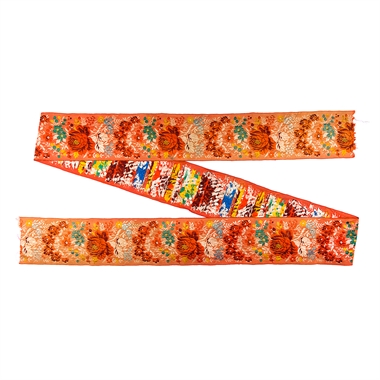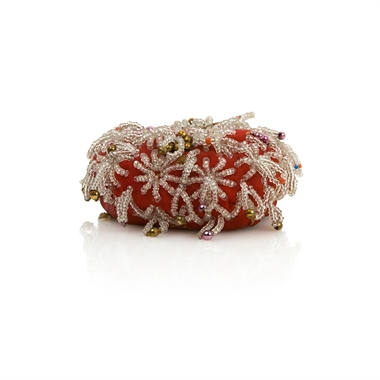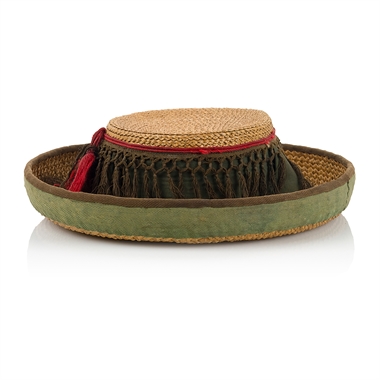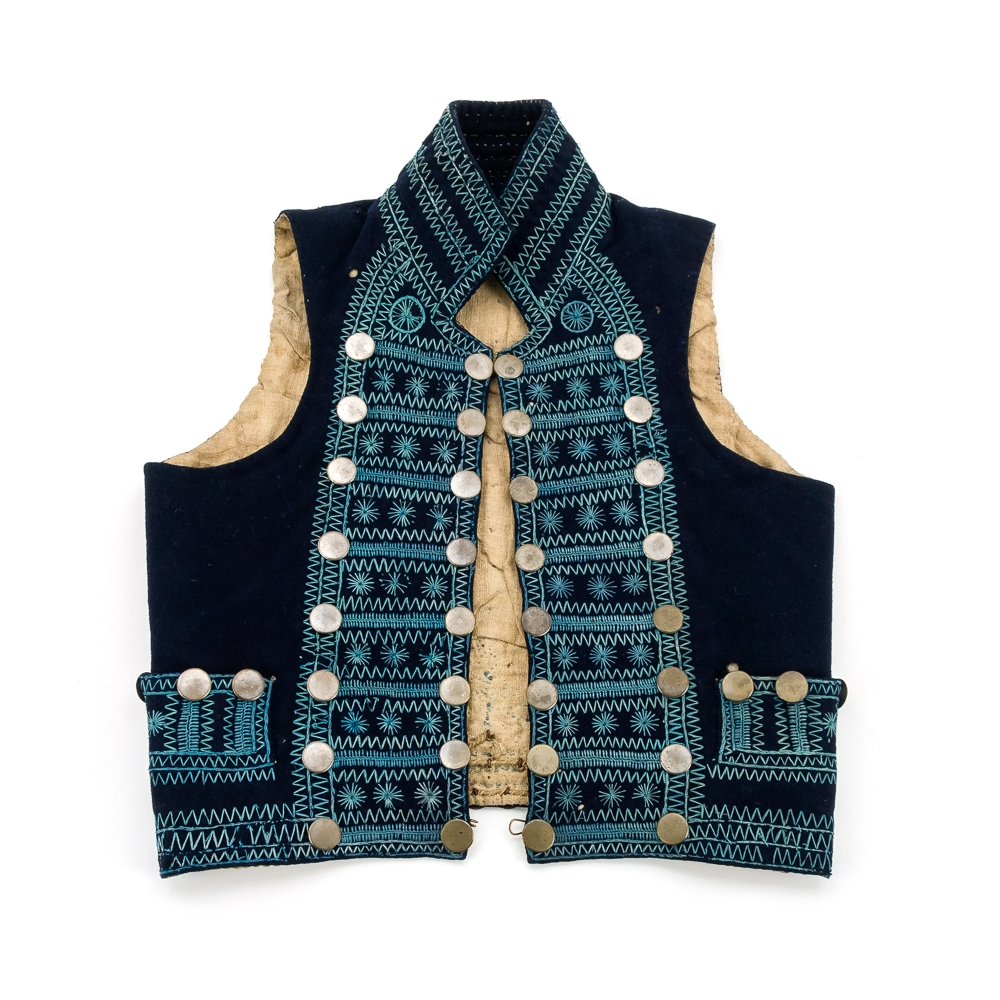
The Collection of Traditional Costumes of Central Croatia (Posavina, Moslavina, Banovina and Turopolje) contains around 3,300 objects. In addition to clothing, the Collection includes headdresses and footwear. Many of the objects in the Collection are part of the initial museum holdings. Women's ceremonial costumes of wealthy peasants, which originate from the 19th and early 20th centuries, make up the largest part of this Collection, which has existed in its current form since 2015. After the Museum was founded, field research was used to document as much information about the objects as possible to overcome the shortcomings of previous practices in which the basic criterion for collecting was aesthetic. In accordance with the theoretical starting points of ethnology at the time, the collected material was supposed to testify to the characteristic type of clothing in a certain cultural and geographical area. Therefore, preference was given to typical and as old as possible items, which most often already existed in the Collection. Although clothes and shoes for ceremonies have a much greater symbolic meaning than is the case with everyday and work clothing, the lack of the latter posed a problem for the analysis of the material and the design of exhibitions. Therefore, in the 1960s and 1970s, museum experts began to acquire objects that allow us to understand folk culture more dynamically, and based on this research we can talk not only about the existence of previous forms, but also forms that arise in interaction with broader social, economic and cultural processes. Today, most of the objects enters the Collection through acquisitions based on offers or donations. For some of the Museum's actions, people were encouraged through the media to bring their own objects related to a particular theme.
We use cookies to track visits to our pages (Google Analytics) for the purpose of improving the pages. The statistics are collected anonymously, and by accepting, you agree to the use of cookies. Find out more